

Introduction
In addition to being a football accomplishment, Scotland’s eagerly anticipated return to the men’s FIFA World Cup after 28 years is an emotional moment ingrained in the country’s history. The Tartan Army experienced a cycle of optimism, heartbreak, rebuilding, and belief for almost thirty years. Fans were left wondering if they would ever see their nation’s flag fly on the biggest athletic platform in the world again after each campaign’s moments of triumph and disappointment.
The ambition of seeing Scotland compete in a World Cup was passed down through the generations from Glasgow’s streets to the highlands and islands. Parents made their kids want for something they had never seen by telling them tales of France 1998 and legendary players like Ally McCoist, Paul Lambert, and John Collins. The night Scotland defeated Denmark in what is now regarded as one of the most dramatic displays in their football history, that longing finally gave way to delight.
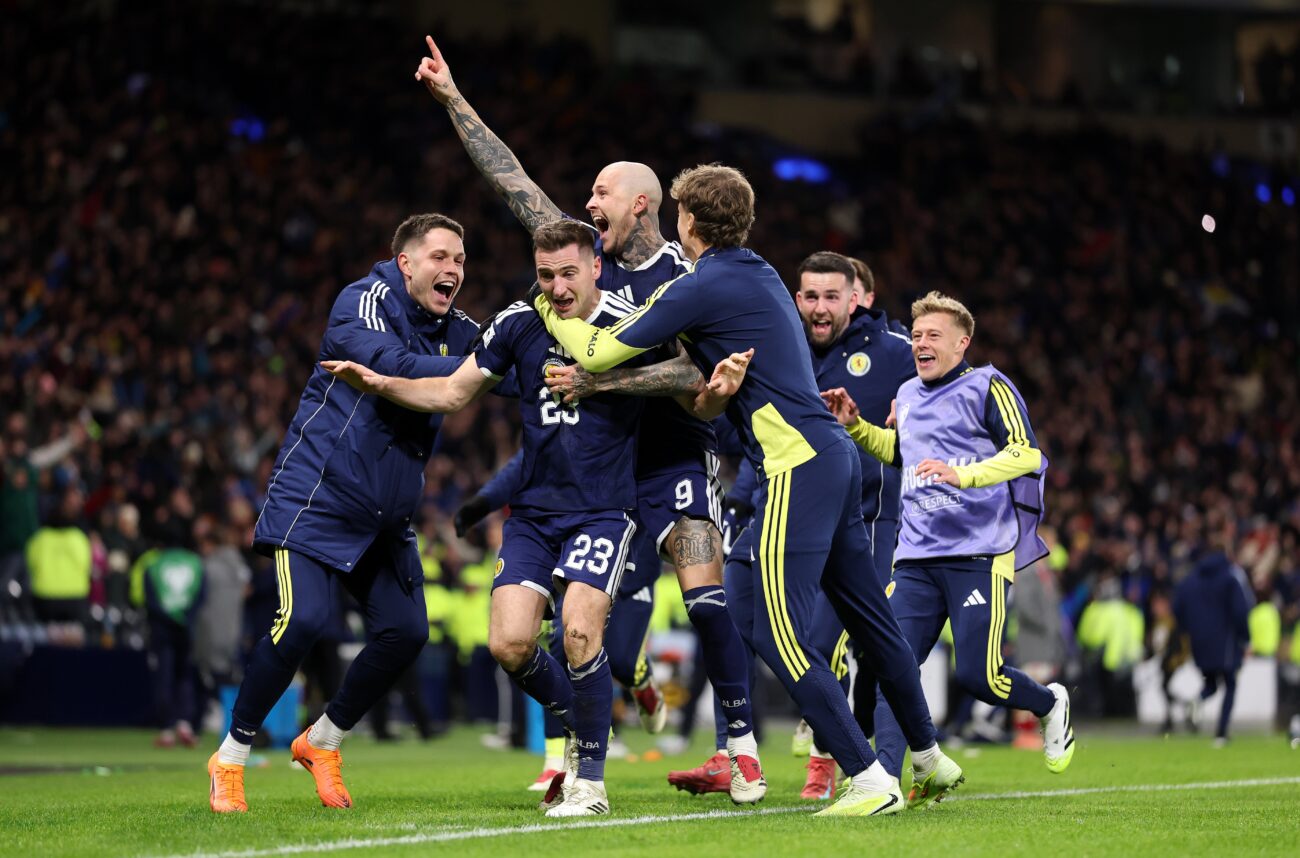
After 28 years, Scotland’s qualification is more than only victory; it also signifies a revitalization of national pride, solidarity, and identity. In Scotland, football has always been a potent unifying factor. It unites people from many places, cultures, and ideologies by enabling them to support the same anthem, colors, and badge. On the night of qualification, Hampden Park erupted with emotion, relief, and the realization that the gloomy shadow of almost thirty years had finally lifted. Not only did Scotland win the match, but they also regained the confidence that had been lost over time. They destroyed the stigma associated with missing out on major events and rebuilt the story of being “almost there.”
More significantly, this qualifying wasn’t an accident. It was the outcome of years of rebuilding, management’s patience, player development advancements, and supporters who stood by the team during its darkest moments. It was the outcome of a shared determination to prevent history from dictating the future. Scotland’s journey serves as a potent reminder that football is about movements rather than just moments—movements of fortitude, tenacity, and hope for the country. Scotland today stands tall with pride, passion, and the assurance that their tale will be different as the world anticipates seeing them on the biggest football stage once more.
The 28-Year Weight
The football world was significantly different when Scotland last competed in the World Cup in 1998. The Tartan Army was unaware that they were seeing what would turn out to be a protracted absence from football’s biggest tournament, social media did not yet exist, and today’s stars had not even been born. Heartbreak and numerous near-misses characterized the years that followed. With every campaign that went by, the wait got longer for a lot of people. Scotland’s football career appeared to be dogged by bad luck and inconsistency, whether they were losing big games, narrowly losing, or drawing games that needed victories.
Every year, the team was under more psychological strain. Every time they wore the blue shirt, players experienced the weight of expectations. Young supporters were never exposed to the excitement of watching their country compete in a World Cup, and critics questioned Scotland’s capacity to compete on a global scale. One thing remained constant despite the frustrations: the Scottish supporters’ allegiance. The Tartan Army, who are well-known throughout the world for their enthusiasm, humor, and undying commitment, never stopped packing stadiums, supporting the team throughout Europe, and singing their hearts out despite the team’s poor performance.
The 28-year weight was cultural as well as athletic. A generation had grown up hearing tales of how wonderful it was to watch Scotland compete in the World Cup, but they had no personal memories of it. The significance of the qualifying night was increased by this emotional divide. Scotland experienced a sense of national healing when the drought finally ended. The lengthy shadow vanished, the darkness lifted, and daylight returned to the nation. The triumph was not just for the current generation; it was an homage to all the supporters who had hoped, dreamed, and waited for Scotland to return to its rightful place.
The Thriller in Denmark
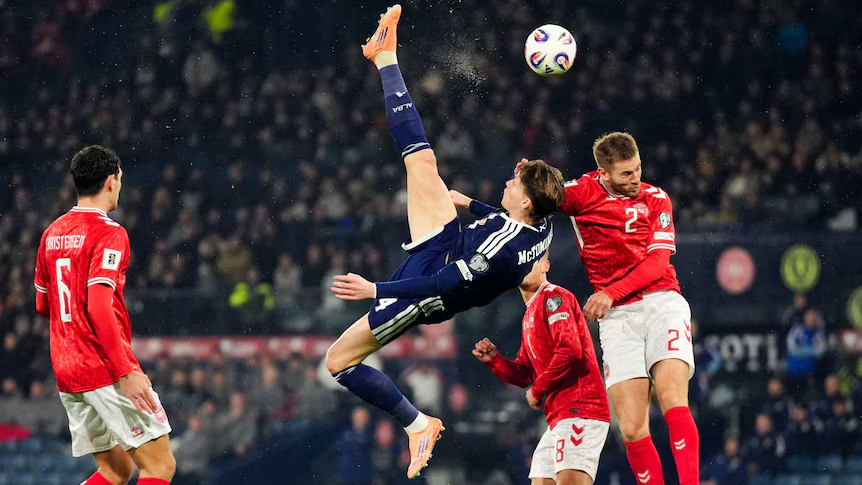
The game versus Denmark was more than just a qualifying match; it was a once-in-a-lifetime event that played out like a big-screen football thriller. Scotland showed passion, ambition, and self-assurance from the first whistle. With thousands of fans roaring in anticipation of a historic evening, the atmosphere inside Hampden Park was tremendous. Scott McTominay’s spectacular overhead goal gave Scotland the lead early on, igniting the stadium and letting Denmark know that this would not be your typical game. Scotland was reminded that they were prepared to battle for their future.
Denmark replied resolutely as the game went on. They were tied in the second half after a contentious penalty, and things started to change. However, Scotland resisted giving in to the pressure. After a brilliant finish by Lawrence Shankland to retake the lead, Denmark equalized once more, silencing the crowd and setting up a tight closing stretch. Scotland’s hopes of qualifying for the World Cup appeared to be in jeopardy with the score at 2-2 and time running out.
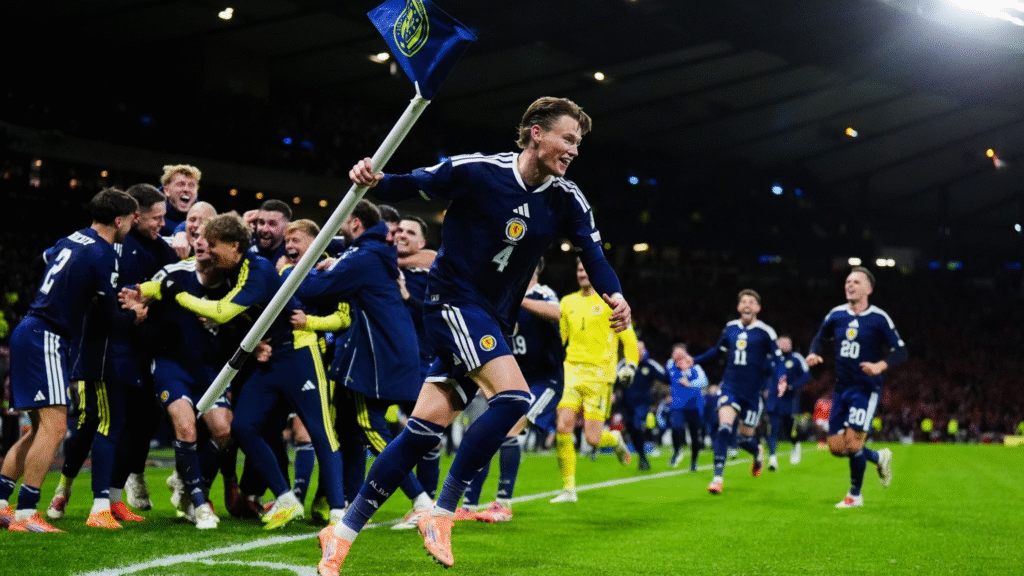
However, the events that followed will be recounted for many years. Kieran Tierney’s incredible curling shot into the far corner during stoppage time caused complete mayhem in the stadium. Fans yelled in shock, hugged strangers, laughed, and sobbed. Kenny McLean confirmed qualification in the most spectacular way possible a few moments later with a fantastic long-range lob. Celebrations that reverberated well beyond the stadium—across the country, across generations, and beyond recollections of previous heartbreaks—were triggered by the final whistle. The Denmark thriller, which demonstrated Scotland’s courage, compassion, and unwavering spirit, quickly became a legend.
The Leadership of Steve Clarke
An important milestone in the history of the national team was the appointment of Steve Clarke as manager of Scotland. Scotland lacked direction, stability, and self-assurance when he assumed power. All three were brought by Clarke. His cool-headed demeanor served as the cornerstone of a new era. He pledged diligence, self-control, and a distinct identity rather than miracles. Scotland became a team based on unity, structure, and belief under his leadership. Each player was fully dedicated to Clarke’s vision, knew their duty, and comprehended the system.
Clarke’s ability to blend the tactical and the emotive is what sets him apart. He is aware of the fervor, pride, and pressure associated with Scottish football culture. He assembled a team that was reinforced by teamwork rather than relying on standout players. Scotland learned to create opportunities with intent on the offensive and got harder to break down defensively. Above all, Clarke reestablished faith. He reassured the players that they were capable of competing with the greatest in Europe since they were strong, talented, and good enough.
Clarke made some very important choices during the Denmark game. His tactical changes frustrated the opposition, his substitutes brought vitality, and his faith in players like Tierney and McLean proved crucial. Instead of claiming credit for himself after the final whistle, Clarke remained modest and praised the players and fans. He is the ideal person to lead Scotland into the World Cup because of his leadership, intelligence, and humility. His impact will be remembered not only for the outcomes but also for giving Scottish football a sense of pride, identity, and optimism again.
The Qualification Heroes
There are heroes behind every great sporting accomplishment, and Scotland had plenty of them throughout this historic campaign. Scott McTominay was an important player in midfield because of his enthusiasm and leadership. In addition to being amazing, his first goal against Denmark was indicative of bravery, tenacity, and the ability to persevere in the face of adversity. McTominay developed into a true leader, mentoring younger players and boosting the team’s morale under duress.
The effort of Kieran Tierney was similarly iconic. He entered the field prepared to alter the course of the game after battling injuries and uncertainties. He made Scottish football history with a last-minute curling strike into the top corner. His enthusiasm for the national squad was evident in this brilliant moment. Minutes later, Kenny McLean’s bold lob sealed the victory, proving that Scotland had finishers who could perform well under duress.
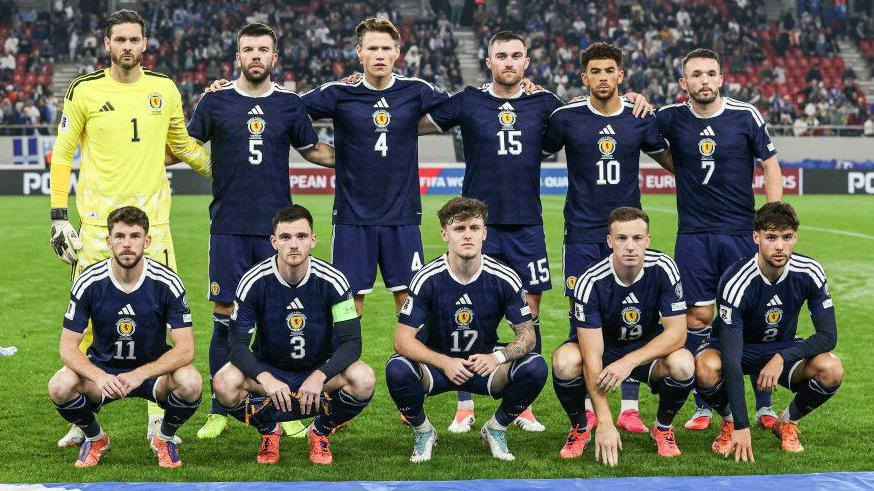
Ryan Porteous, Billy Gilmour, John McGinn, Andy Robertson, and Lawrence Shankland all had significant roles during the campaign. Together, they created a well-rounded squad that was destined to create history since each of them contributed special talents including inventiveness, speed, leadership, and poise. These warriors turned into icons of pride for the country, demonstrating that Scotland’s power is found in its heart, togetherness, and collaboration rather than in any one person. The world was reminded by their performances that Scottish football is vibrant, strong, and prepared to compete on the grandest platform once more.
The Effect on Fans’ Emotions
Qualification was more than just happiness for Scottish supporters; it was an emotional release. A generation had grown up anticipating a time they were unsure would come again. Tears filled the stadium, houses, bars, and streets after Scotland scored their last goals against Denmark. Grandparents who recalled 1998 rejoiced with grandchildren who had never experienced such a moment before. Football and Scottish identity become more emotionally connected than before.
Chants reverberated throughout Glasgow, Edinburgh, Aberdeen, Dundee, Inverness, and beyond, flags were waved everywhere, pipes and drums filled the streets, and fans took to social media. The qualifying made supporters who were overseas feel more connected to their home country. Football brought Scotland together in a world that seemed more and more divided. Everyone was reminded that the Tartan Army is among the world’s most ardent fan bases—loyal in defeat, unstoppable in victory.
Everyday life was affected emotionally as well. Children were permitted to wear Scotland shirts to school the next day. Celebrations broke out throughout workplaces. Families exchanged memories, pictures, and anecdotes. Generations to come will recall the national occasion created by the qualifying. It underlined the ability of athletics to uplift people’s spirits and foster harmony.
What This Signifies for Football in Scotland
Scotland’s qualification is a sign of development and future promise, not just a cause for celebration. The national team has finally accomplished something that can motivate upcoming generations of young football players after years of despair. With aspirations of donning the blue jersey on the international scene, more kids will now enroll in academies. Grassroots development will probably receive more funding, raising the standard of facilities and training across.
Qualification increases Scottish players’ visibility throughout Europe at the professional level. Scottish talent attracts the attention of foreign scouts, clubs grow more interested in it, and players’ confidence rises. Scottish football has an enormous opportunity to demonstrate that it is among the greatest thanks to the World Cup platform. Additionally, because players recognize the pride of representing their country, the relationship between clubs and the national team is strengthened.
This qualification also emphasizes how crucial leadership and stability are in football. With perseverance, long-term planning, and faith in Steve Clarke’s approach, Scotland was able to achieve this feat. Scotland may become a consistent challenger in important competitions if this strategy is maintained. Now, the momentum is genuine, strong, and full of possibilities.
Scotland’s Comeback to the World Stage
Scotland’s 28-year absence from the World Cup is more than just symbolic; it’s a declaration. It conveys to the world Scotland’s return, strength, resolve, and competitiveness. The international stage offers opportunities as well as pressure, exposure, and status. Millions of people will watch each match as Scotland takes on elite teams. The gamers can showcase their skills, morals, and spirit to the world on this platform.
The Tartan Army will travel in enormous numbers, transforming stadiums into azure waters and fostering one of the tournament’s most fervent environments. Scotland’s participation will give the World Cup more vibrancy, enthusiasm, and personality. On a global level, the nation’s football culture—characterized by devotion, humor, and spirit—will once again shine brilliantly.
Most significantly, Scotland’s World Cup comeback gives the country hope that a new age is just getting started. The supporters are united, the manager is ready, and the players are ravenous. Scotland’s team is now built by heart, resiliency, and the will to leave a fresh legacy rather than by past mistakes. Soon, the world will see what Scotland is capable of.
In conclusion
After 28 years, Scotland finally qualified for the men’s World Cup, an event that will live on in the country’s sports history. It is a victory of faith, commitment, and perseverance as well as a football accomplishment. The Scottish people held out hope that their national side would make a comeback to the international scene for almost thirty years. Years of heartache, close calls, and agonizing campaigns put that hope to the test, but it never vanished. That unshakable hope was rewarded in the most memorable and poignant way the night Scotland defeated Denmark.
This qualification is important in ways that go well beyond the field. It has restored a sense of pride that had been absent for far too long, established ties among communities, and revitalized the spirit of a country. In Scotland, football is more than just a game; it is an integral element of the nation’s identity, culture, and history. It unites people in a way that nothing else can. Stories and memories unite generations, families celebrate together, and strangers become friends. Every fan, regardless of age, has a moment to treasure with the return to the World Cup.
For the players, this accomplishment is evidence of their commitment, tenacity, and enthusiasm. They performed under extreme strain while bearing the burden of a country’s expectations. They demonstrated that Scotland is capable of overcoming obstacles, competing with formidable teams, and delivering outstanding performances during pivotal times. This voyage was significantly shaped by Steve Clarke’s leadership. Scotland became a disciplined, self-assured, and resolute team thanks to his cool-headedness, tactical acumen, and capacity to foster unity. He restored not just the team but also the spirit of Scottish football.
It is impossible to overestimate the emotional impact of qualification. Celebrations broke out across the nation, resulting in scenes of unadulterated happiness, screams of pride, and tears of ecstasy. This was a time of fulfillment and closure for those who had endured the heartache of earlier campaigns. It made lifelong memories for younger supporters who had never seen Scotland compete in a World Cup. The relationship between the squad and its followers has been reinforced by this qualifying, demonstrating once more why the Tartan Army is among the world’s most ardent fan bases.
Beyond joy, though, this accomplishment also offers opportunity and duty. Scotland now has the opportunity to demonstrate its talent, spirit, and solidarity on a worldwide scale. They will get a chance to show that they are among the finest in the world at the World Cup. It will drive the group to reach new heights, gain knowledge from novel situations, and keep developing. For Scottish football, this is the beginning of a new chapter—not the conclusion of a journey, but the beginning of a better future.
The tale of Scotland’s World Cup comeback serves as a potent reminder of what can be accomplished with faith, perseverance, and teamwork. It serves as a reminder that dreams can come true despite the length of the wait. The players are prepared, the country is proud, and everyone is waiting for Scotland’s eagerly anticipated return. Stadiums will be filled with enthusiasm, pride, and the sound of song as the Tartan Army marches once more. Scotland has returned, and their tale is just getting started.
Follow us on
Instagram – Damn Fitt
Twitter – https://x.com/damnn_fit
Facebook – https://www.facebook.com/profile.php?id=61578307628888
Click Below👇🏻 Links For More Topics
Let’s Know About Celebrities Fitness
Click Here👇🏻
( https://fitdamn.com/category/celebrity/ )
Let’s Know About Cricketers Fitness
Click Here👇🏻
( https://fitdamn.com/category/cricketer/ )
Let’s Know About Fitness
Click Here👇🏻
( https://fitdamn.com/category/fitness/ )
Let’s Know About Fitness Challenges
Click Here👇🏻
( https://fitdamn.com/category/fitness-challenge/ )
Let’s Know About Fitness Facts
Click Here👇🏻
( https://fitdamn.com/category/fitness-facts/ )
Let’s Know About Fitness Mistakes
Click Here👇🏻
( https://fitdamn.com/category/fitness-mistakes/ )
Let’s Know About Fitness Foods
Click Here👇🏻
( https://fitdamn.com/category/foods/ )
Let’s Know About Footballers
Click Here👇🏻
( https://fitdamn.com/category/footballer/ )
Let’s Know About Motivational Quotes
Click Here 👇🏻
( https://fitdamn.com/category/quotes/ )
Let’s Know About Workouts
Click Here 👇🏻
( https://fitdamn.com/category/workout/ )
