


Introduction
Many people consider seven-time Formula 1 World Champion Lewis Hamilton to be among the best drivers in motorsport history. His name is a byword for quickness, accuracy, and fortitude. But there is a world of tremendous physical and emotional hardships hidden beneath the glitz of the podium and the thunder of the motors. F1 automobile racing is a sport that requires extreme stamina, endurance, and willpower in addition to competence.
Being physically fit is essential to Lewis Hamilton’s success and is not an option. Formula 1 demands a special combination of aerobic capability, muscular endurance, lightning-fast reflexes, and mental acuity, all of which Lewis Hamilton has perfected through years of focused training. This is in contrast to other sports where athletes can rely on strategy or sheer power.
The physical toll that driving an F1 car puts on a racer’s body is often underestimated. The strain caused by the G-forces that occur during abrupt bends, braking, and acceleration can be many times the weight of the driver. Through perspiration and calorie expenditure, an F1 driver can lose up to three kilogrammes of body weight in a single race. Fitness has always been a top priority for Lewis Hamilton, who is renowned for his exceptional consistency and capacity to operate in harsh environments. In addition to helping him win races, Lewis Hamilton commitment to fitness has allowed him to play one of the world’s most physically taxing sports for a long time.
A comprehensive strategy that incorporates cardiovascular exercises, strength training, core stability, reaction time drills, and mental conditioning, Lewis Hamilton training regimen goes beyond simply going to the gym. Every element of Lewis Hamilton regimen is designed to get him ready for the unique difficulties of Formula One racing. Every detail counts, from strengthening his neck to handle lateral forces when cornering to improving his mental toughness for snap choices at 300 km/h. This blog delves deeply into Lewis Hamilton’s fitness secrets, dissecting them into ten essential elements that contribute to his status as one of the world’s most fit sportsmen.
What, therefore, is required to stay as fit as Lewis Hamilton is? What physical activities, dietary decisions, and psychological strategies does he employ to maintain his competitive edge? Ten essential fitness techniques that characterise Lewis Hamilton performance both on and off the track are examined in this blog. Each segment demonstrates how his training and lifestyle decisions have contributed to his amazing achievement, demonstrating that being a champion requires a tireless dedication to fitness and health rather than just skill.
1. Establishing a Robust Core: The Basis of Authority
One of the most important areas for any Formula One driver is the core, and for Lewis Hamilton, it is of utmost importance. The stability needed to manage the massive G-forces produced during high-speed cornering and braking is provided by a robust core. strong F1 driver needs strong all-around core system to maintain posture and balance inside the cockpit for up to two hours at a time, unlike a typical athlete who can just rely on lower back strength. To improve his core strength and endurance, Hamilton uses exercises including stability ball workouts, Russian twists, planks, and hanging leg lifts.
In addition to stabilising Lewis Hamilton back, these core exercises enable him to steer precisely and without weariness. A driver’s ability to react swiftly to steering changes may be compromised by a weary core, which could have disastrous consequences during a race. In order to replicate the unpredictable strains of an F1 cockpit, Lewis Hamilton works his core virtually daily by alternating static holds with rapid motions. This method guarantees that even in the face of strong lateral forces, his body will be stable.
2. Neck Strength: F1 Fitness’s Unsung Hero
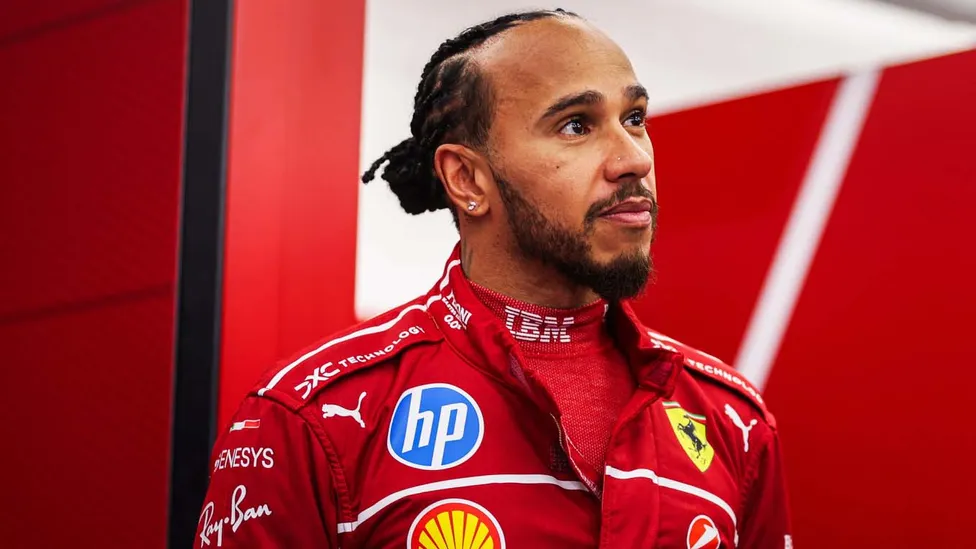
Few people are aware of the neck strain that Formula One drivers experience. Because of G-forces, the head and helmet can weigh up to 25 kg at high speeds; Lewis Hamilton trains especially to manage this. Weighted head motions, neck harness lifts, and resistance band exercises are all part of his regimen. By strengthening the sternocleidomastoid and trapezius muscles, these exercises enable him to maintain head stability around corners without experiencing weariness or strain.
By doing neck exercises while seated or with balancing aids, Lewis Hamilton also replicates race circumstances. In order to ensure that he can handle the frequent force changes that occur during a race, this combination trains both static and dynamic neck strength. A strong neck is essential for both comfort and concentration; without it, a driver may lose their bearings or experience diminished attention, something Hamilton cannot afford when racing at 300 km/h.
3. Heart of the Race: Cardiovascular Endurance
The cardiovascular demands of Formula One are unexpectedly high, despite the sport’s seeming sedentary nature. During a race, Hamilton’s heart rate often remains in the 160–180 bpm range, which is comparable to that of a marathon runner. He uses HIIT (High-Intensity Interval Training), cycling, and long-distance running as training methods to sustain this level of endurance. One of his favourite things to do is cycle because it strengthens the lower body and increases cardiovascular efficiency without putting too much strain on the joints.
Because HIIT sessions replicate the start-stop nature of racing, when heart rate varies significantly, they are crucial for Hamilton. He is able to adjust to abrupt increases in physical effort thanks to these workouts, which consist of brief sprint bursts followed by active recuperation. In addition to promoting energy efficiency and fat burning, this exercise keeps Hamilton nimble and trim throughout the racing season.
4. Strength in the Upper Body: Accuracy Under Stress
A Formula One steering wheel is heavier than it appears. It takes a lot of upper body strength, particularly in the arms, shoulders, and chest, to steer an F1 car. To increase the endurance of these muscle groups, Hamilton uses exercises including bench presses, push-ups, pull-ups, and resistance band work. He is able to drive the car precisely and without arm strain thanks to these exercises.
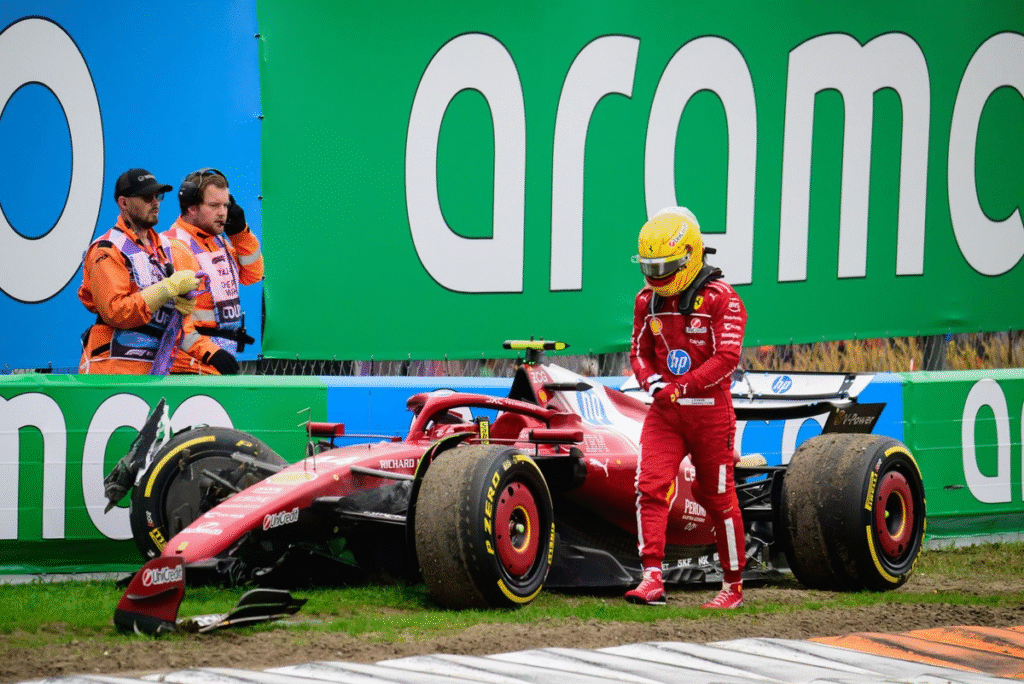
Additionally, Hamilton prioritises muscular endurance over bulk because too much muscle gain can add unneeded weight, which is bad for Formula One racing. To build endurance and have a trim figure, he frequently uses smaller weights and more repetitions in his upper body workouts. Because of this, he may continue to use his fine motor skills for extended periods of time without losing his agility.
5. Stability of the Lower Body: The Strength of Pedals
The legs are vital for braking and acceleration in Formula One racing, even if they might not be subjected to the same amount of strain as the upper body. To make sure he can exert exact pedal pressure under G-forces, Hamilton works out his calves, hamstrings, and quadriceps. His leg program consists of workouts like leg lifts, lunges, and squats, while single-leg exercises and stability drills with Bosu balls improve coordination and control.
Because F1 cars’ brake pedals need a lot of force—sometimes more than 100 kg of pressure—especially while braking at high speeds, these exercises are essential. Hamilton has the competitive advantage required for late braking and improved turning performance because of his leg strength and control, which allow him to brake steadily and without fatigue lap after lap.
6. Mobility and Flexibility: Maintaining Adaptability in the Cockpit
In motorsport, flexibility is frequently disregarded, but for Lewis Hamilton, it is essential. Drivers of Formula One cars must twist and turn their bodies under tremendous stresses since the cockpit is quite cramped. To keep his hips, shoulders, and spine mobile, Hamilton mixes yoga and dynamic stretching into his exercise regimen.
Hamilton also uses yoga as a mental and physical relaxation technique, which helps him increase blood flow and lessen muscle stiffness. He will be less likely to get injuries during the season thanks to this flexibility training, which guarantees that he can swiftly adjust to any automobile movement without putting undue strain on his muscles.
7. Speed Beyond the Car: Reaction Time Training
F1 racing relies heavily on reaction time. Even a split second of delay might result in a crash or a loss of position when travelling at 300 km/h. Hamilton uses light boards, video simulation exercises, and reaction drills to improve his reflexes. By enhancing his neurological response time, these gadgets guarantee that his hands and feet react to visual or aural inputs instantaneously.
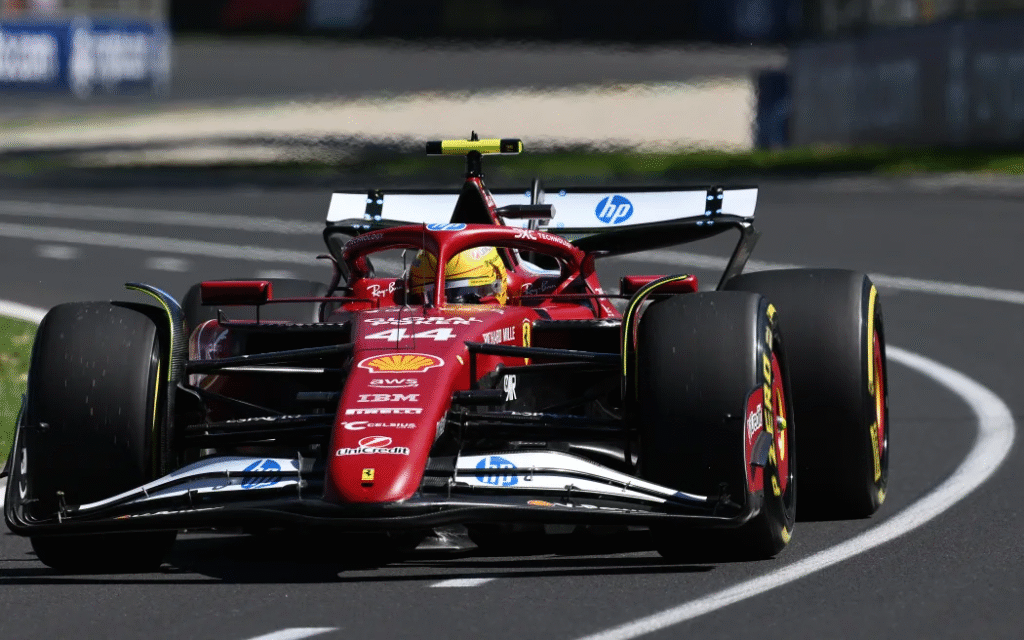
In order to simulate race conditions and train his brain to make quick decisions even when fatigued, he frequently mixes these workouts with physical exhaustion. Hamilton is able to remain incredibly alert during crucial situations, such as averting an accident or performing a flawless overtake, thanks to this degree of preparation.
8. Mental Fortitude: The Imperceptible Power
For Lewis Hamilton, mental toughness is equally as crucial as physical conditioning. Formula 1 is extremely stressful psychologically; split-second choices, team tactics, and media attention all contribute to the strain. Hamilton uses visualisation, mindfulness, and meditation to stay composed and focused under duress.
By practicing races and scenarios in his mind, Hamilton improves his ability to remain composed and carry out plans perfectly. In a sport where the difference between winning and losing is extremely narrow, this mental training also helps him bounce back from losses and keep his confidence high.
9. Fuelling the Champion with Proper Diet and Hydration
Hamilton eats a plant-based diet that emphasises entire foods such grains, legumes, fruits, and vegetables. This diet keeps his body trim without compromising power, helps him recuperate, and gives him pure energy. To maintain his energy levels during rigorous training and competition, he stays away from processed foods and makes sure his meals are high in proteins, complex carbohydrates, and healthy fats.
Because drivers might lose litres of perspiration during a race, staying hydrated is equally important. To keep fluid balance and avoid dehydration, which could affect his focus and reaction time, Hamilton drinks electrolyte-rich beverages. His approach to nutrition and hydration guarantees that he performs at his best all season long.
10. Sleep and Recuperation: The Quiet Performance Enhancers
No exercise regimen is complete without adequate recuperation, and Hamilton is the best person to realise this. He puts a high priority on getting 8 to 9 hours of sleep each night and employs methods like massage, physiotherapy, and cryotherapy to lessen muscular discomfort and hasten the healing process.
In order to keep his blood flowing without overtaxing his body, Hamilton often takes active recuperation days, during which he does simple workouts like yoga or swimming. He avoids fatigue and maintains his physical and mental stamina for each race weekend thanks to this well-rounded strategy.
In conclusion
Lewis Hamilton’s remarkable performance in Formula 1 is not an accident; rather, it is the consequence of his unwavering dedication to physical fitness, mental toughness, and general wellbeing. Hamilton stands out from the competitors because to his preparedness in a sport where even the slightest mistake may spell disaster. His fitness program is a well-thought-out approach that emphasises strength, endurance, agility, flexibility, and mental toughness in addition to the physical components of training.
Making Lewis Hamilton the best version of himself when he takes to the skies is the goal of every training session, meal, and recuperation session. His commitment demonstrates that top-level racing necessitates a lifestyle based on self-control and resolve more than merely driving prowess.
Lewis Hamilton’s strategy is very inspirational since he views every obstacle as a chance to get better. He knows that racing a car is only one aspect of Formula 1; another is training the body and mind to function as a single unit under some of the most trying circumstances. Even the strongest people can be broken by the extreme G-forces, intense heat in the cockpit, and mental exhaustion that accumulates over the course of a two-hour race. However, Hamilton’s readiness allows him to succeed. His ability to remain composed under duress, sustain physical endurance, and bounce back fast from demanding races is evidence of his well-rounded approach to fitness and mental toughness.
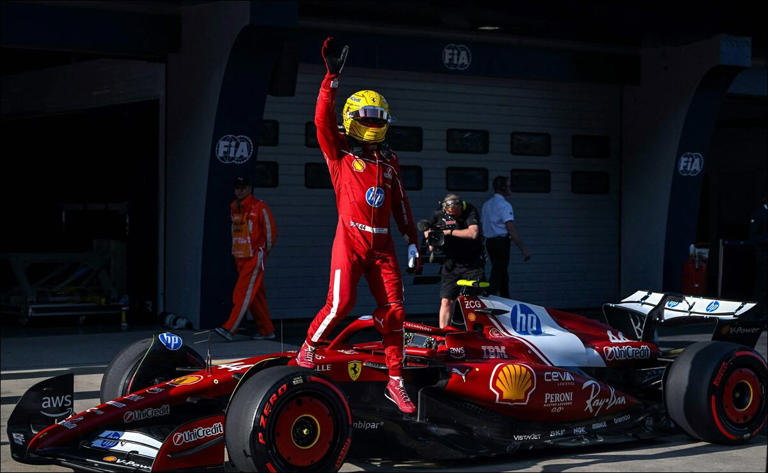
For millions of fans, Lewis Hamilton has transcended the racecourse to become a symbol of wellbeing and health. Being at the top requires consistency, wise decisions, and self-belief; his plant-based diet, dedication to recuperation, and mental conditioning practices demonstrate this. Strength, endurance, flexibility, and awareness are all included in Hamilton’s workout regimen to support his long-term health and racing objectives. throughout a sport that continuously tests physical boundaries, this well-rounded strategy guarantees that he not only wins today but also advances throughout his career. His fitness journey serves as evidence that perseverance and hard work are the foundations of success.
Lewis Hamilton’s legacy in Formula 1 will ultimately encompass more than just his race victories and world titles; it will also include the benchmark he established for mental and physical preparation in motorsport. He has demonstrated that brilliance is the product of many hours spent honing every facet of performance, not just skill. His narrative serves as a potent reminder to aspiring racers, athletes, and fitness aficionados that complete dedication is necessary for excellence. Lewis Hamilton is a role model for tenacity, fitness, and resolve in addition to being a brilliant driver. His story shows us that nothing is impossible in life or on the racecourse if you have the correct attitude and training.
Follow us on
Instagram – Damn Fitt
Twitter – https://x.com/damnn_fit
Facebook – https://www.facebook.com/profile.php?id=61578307628888
Click Below👇🏻 Links For More Topics
Let’s Know About Celebrities Fitness
Click Here👇🏻
( https://fitdamn.com/category/celebrity/ )
Let’s Know About Cricketers Fitness
Click Here👇🏻
( https://fitdamn.com/category/cricketer/ )
Let’s Know About Fitness
Click Here👇🏻
( https://fitdamn.com/category/fitness/ )
Let’s Know About Fitness Challenges
Click Here👇🏻
( https://fitdamn.com/category/fitness-challenge/ )
Let’s Know About Fitness Facts
Click Here👇🏻
( https://fitdamn.com/category/fitness-facts/ )
Let’s Know About Fitness Mistakes
Click Here👇🏻
( https://fitdamn.com/category/fitness-mistakes/ )
Let’s Know About Fitness Foods
Click Here👇🏻
( https://fitdamn.com/category/foods/ )
Let’s Know About Footballers
Click Here👇🏻
( https://fitdamn.com/category/footballer/ )
Let’s Know About Motivational Quotes
Click Here 👇🏻
( https://fitdamn.com/category/quotes/ )
