

Introduction
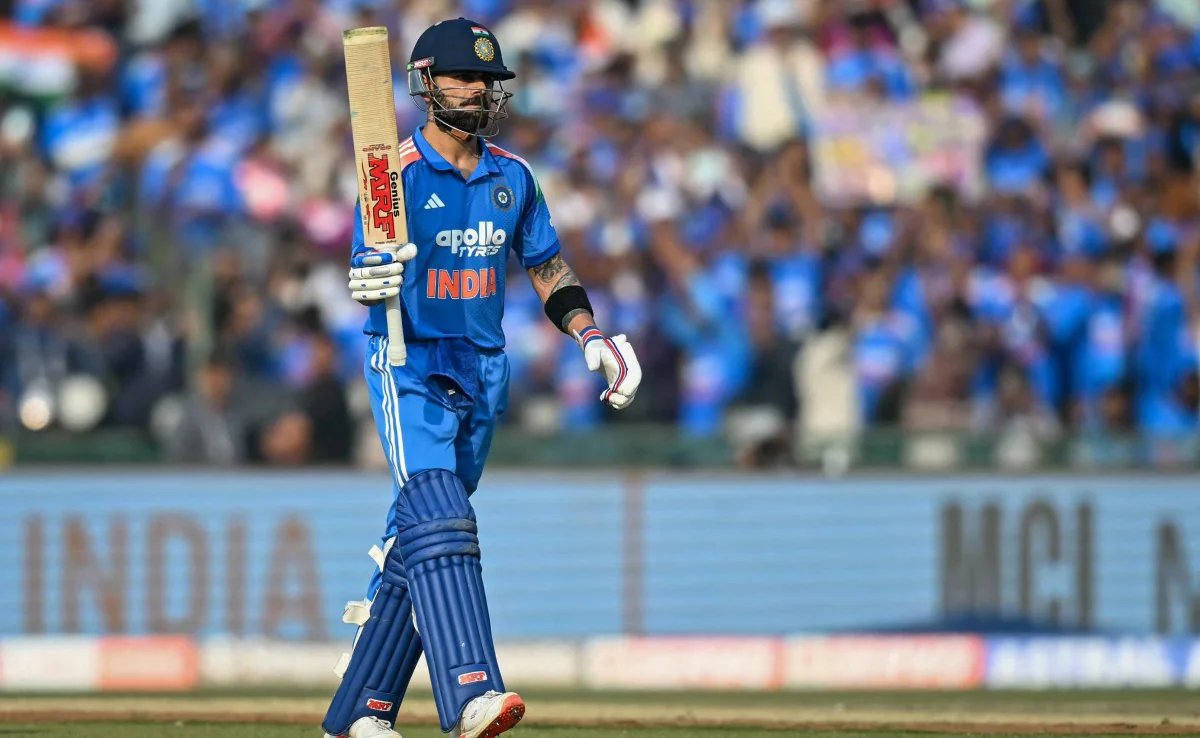
India’s latest cricketing war turned into a breathtaking demonstration of grit, intensity, and genius, fueled almost completely by one man – Virat Kohli. On a day when conditions were restless, bowlers were disciplined, and pressure was growing from the very first over, India fought their way to a competitive 275 runs, a total that now feels much larger because of the genius that was demonstrated at the crease.
The centerpiece of the innings was the Kohli Century, a knock that combined mastery, elegance, and unwavering mental toughness. This was more than simply another hundred from a superstar; it was a statement that reverberated throughout the stadium, reminding everyone that greatness never fades and always comes back to life when the team most needs it.
Kohli Century managed to turn the tide back in favor of India as the innings went on and wickets dropped all around him. He did this by absorbing pressure and unleashing it with expertly timed boundaries and laser-focused decision-making. What started out as a cautious stay at the crease turned into a magnificent innings that is currently the focal point of India’s scoreboard.
The circumstances of this match makes the Kohli Century even more noteworthy. India’s top order got off to a shaky start as they were unable to adapt to the tight bowling lines and early movement. The pitch performed unexpectedly, delivering enough grip and bounce to keep batters guessing. In addition to expertise, the situation required leadership—someone who knew how to turn these spells into opportunities as well as how to withstand them. That presence was Kohli Century. His innings was based on control, strategy, and selected dominance rather than rash aggression. Every run he made impacted the narrative. Every boundary reenergized the crowd.
Every moment of serenity reminded millions why he remains India’s most trusted hitter across forms. His knowledge of the field, his ability to rotate strike even under pressure, and his knack to alter gears at the precise time defined the flow of India’s innings. The total of 275 seems competitive because it bears the fingerprint of Kohli’s genius, and the scoreboard moved because he made it move.
Without acknowledging the emotional and psychological significance of the Kohli Century, this introduction is lacking. This was a display of character as much as a technical accomplishment. Over the years, Kohli Century has become famous with chasing big situations, and this innings extended that trend. As he reached triple figures and raised his bat with the composed intensity that only a player of his caliber possesses, the audience exploded with thrilling excitement. The hundred wasn’t spectacular — it was purposeful. It wasn’t explosive — it was precise.
The innings knitted together relationships, safeguarded a vulnerable batting order, and finally provided India a goal they could defend. One thing became clear as the players left the field: India’s total was more than just 275 runs; it was 275 runs shaped around a masterpiece. And that masterpiece was the Kohli Century, towering strong as the pillar of India’s hopes in this riveting duel.
How Kohli Century Built His Innings Under Extreme Pressure
Virat Kohli’s approach to this innings reflected deep experience and unmatched composure. He did not attack immediately or submit to early pressure; instead, he waited the match to develop into Kohli Century rhythm. The bowlers were disciplined, attacking the seam with good length, but Kohli found ways to nullify their plans with gentle hands and minimal risk. Kohli Century goal was to live long enough to have an impact on the game rather than to score immediately. Every delivery he faced felt like a battle within a larger war.
Kohli Century defended the good deliveries, pounced on the rare errors made by the bowlers, and cautiously left balls outside off stump. As he felt comfortable, it became evident that he was the stadium’s most knowledgeable about the circumstances. Kohli Century presence calmed the innings after the early meltdown, providing India the one thing they most needed – time.
As the innings continued, Kohli Century began noticing gaps, bowlers’ routines, and flaws. He nudged singles into tight places, transformed ones into twos with crisp running, and progressively shifted the pressure back onto the opposition. The bowlers attempted everything — bouncers, yorkers, wide lines — but Kohli remained undeterred.
His exceptional shot selection was based on a combination of intuition and strategy. He refused to get tempted into excessive risks, choosing instead to construct a timeline for his innings. His confidence increased as he reached the 40–50 run threshold. His flicks got more accurate, his wrists started to flow, and his drives started to elegantly clear the infield. The tide had turned. What started off as survival evolved into control, which then evolved into domination.
Kohli Century unparalleled ability to read opponents was on display in the last part of the innings. He could tell when bowlers were worn out and used that information to launch an attack. His acceleration wasn’t random; rather, it was deliberate, choosing particular deliveries instead of swinging aimlessly. The crowd’s thunderous applause as soon as he got his hundred underlined what everyone already knew: this innings was the result of skill, perseverance, and a fierce competitive spirit rather than chance or opportunity. Kohli Century had built his century brick by brick, illustrating why in the roughest situations, he remains the most trustworthy pillar in Indian cricket.
The Kohli Century’s Significance in Maintaining India’s Unstable Middle Order
India’s performance today was molded not only by the scoreboard but by the anxiety that gripped the middle order as early wickets tumbled under the pressure of disciplined bowling. It wasn’t simply the technical obstacle but the psychological strain of seeing two swift dismissals in succession. In such moments, a batting team often falls more, losing confidence and rhythm. But this is when the Kohli Century became more than personal accomplishment; it became the anchor holding the entire innings together.

As novice hitters went in, attempting to assess the movement off the pitch, Kohli Century kept solid, delivering encouragement through his presence. He communicated continuously between overs, directed shot selection, eased nerves, and made sure India’s middle overs didn’t descend into anarchy. His ability to absorb pressure allowed everyone around him to focus on survival rather than rescuing the innings alone, and that stability helped India avoid a potentially fatal collapse.
The atmosphere in the dressing room changed throughout this innings. The other batsmen are psychologically protected when a veteran like Kohli remains at the crease. They are aware that because the scoreboard is still rolling, they don’t need to take chances to make up for delayed scoring. Kohli managed the strike intelligently, taking singles early in overs to protect partners then farming the strike when bowlers threatened the less experienced batsmen.
His lucidity under pressure boosted the middle order’s sense that the innings still belonged to them, not the opposition. As Kohli kept the clock ticking, the bowlers, who had earlier dominated, started to lose form and had to reconsider almost every strategy. The confidence he brought to the crease trickled throughout the remainder of the batting lineup, providing the middle order just enough solidity to add minor yet essential partnerships around him.
The timing, in addition to the runs, was what made the Kohli Century invaluable. India was at a crossroads when he hit his fifty, and the team was still susceptible when he began to accelerate. His century reinforced the innings at its weakest point in addition to inflating the total. Without his guiding hand, the middle order might have broken under duress, turning a possible 275 into a disappointing total way short of par.
Rather, every batter was able to play organically and without rush or stress thanks to his leadership through action. By the end of the innings, India appeared to be a squad that had overcome hardship rather than given in to it because he had transformed a precarious phase into a controlled one. This sub-topic illustrates why Kohli’s role was not only as a scorer but as the fundamental pillar that held the entire batting structure straight.
How Early Advancements Made It Difficult for the Opposition to Stop the Kohli Century
The opposition bowlers opened the encounter with brilliance, executing precise lines, utilizing early movement, and locking India into a pressure-led start. For the first six overs, it looked like India would fall swiftly as the top order failed to handle the swing and sharp seam movement. With each wicket, the fielders’ enthusiasm increased, and the bowlers seemed certain that they could destroy India for a subpar score. But the moment Virat Kohli settled into his groove, everything began to change gradually yet firmly. They recognized the threat he posed, but the genuine issue was significantly larger after he started learning the pitch.
Every time the bowlers attempted to apply pressure, Kohli released it with a neat single, a boundary through the covers, or a confident swing away from a rising delivery. These micro-moments, when the bowlers sensed containment was sliding out of their grasp, were the beginning of the Kohli Century. After being so disciplined in the beginning, their lengths began to fluctuate, giving Kohli the opportunity to alternate strikes and progressively assume control.
As Kohli continued through his innings, the bowlers’ irritation became obvious. His concentration was unaffected by angle changes, field location modifications, and slower delivery studies. Kohli’s ability to foresee their next move was what made his control so remarkable. He examined release angles, assessed the wrist positions, and waited for even the smallest mistake in execution. The bowlers provided intentional spells, but Kohli handled the pressure so well that the opposition was unable to sustain momentum.
Their short-of-a-length deliveries were punched off the back foot, their full balls drove brilliantly, and their bouncers left with effortless confidence. Even when they sought to trap him with leg-side fields, Kohli worked them around with delicate flicks. By the time he hit fifty, the bowling unit that had once seemed formidable had become exhausted and was powerless to intimidate a batter who was performing at a different level.
When the innings took a significant turn, Kohli started to accelerate toward the end of his Kohli Century. He converted from anchor to aggressor without pressing the pace, making the bowlers reconsider their intentions the more urgently. The opposition attempted putting their strike bowlers together, aiming to disturb Kohli’s rhythm, but the approach backfired as he punished any inconsistencies. The bowlers, once roaring with confidence, now carried the weight of wasted opportunities and diminishing enthusiasm. They overpitched searching for swing, bowled broader lines trying to tempt edges, and eventually lost runs because Kohli commanded every moment.
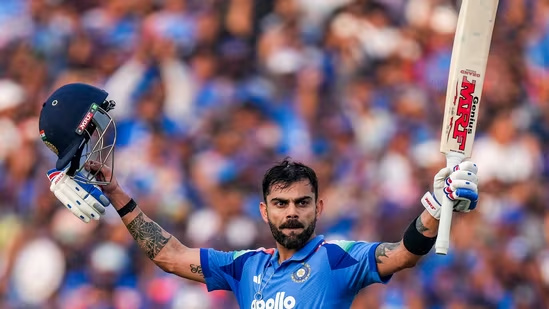
His century was not only a batting milestone—it was a psychological victory over a bowling attack that had no solutions once he entered his zone. It demonstrated why Kohli is still one of the hardest batsmen in the world to bowl at when he believes the game is his. The opposition was not just outplayed but also outthought.
The Importance of Collaborations Around Kohli’s Century in Rebuilding India’s Innings
While Virat Kohli dominated the scoreboard with his Kohli Century, the partnerships he created with the middle and lower order were equally essential in ensuring India achieved a competitive 275. Cricket is never a solo sport, and even the greatest individual innings requires help from others batting alongside. In this innings, Kohli carried the responsibility of sheltering the less experienced teammates at one end while maintaining the strike in his control. He rotated the stroke effectively, minimized dangerous singles for fragile partners, and encouraged them to play within their comfort zones.
Each modest contribution, whether it was a quick single or a patient 20-run effort, was enhanced by Kohli’s presence, establishing a sense of steadiness. The innings’ seamless transition from shaky beginnings to controlled dominance was made possible by his coordination with each partner.
Additionally, the partnerships gave India the psychological cushion they required during pivotal moments of the innings. Every time a wicket fell at the other end, Kohli’s calm temperament and intelligent strike farming prevented panic from setting in. Knowing that Kohli was at the crease, the lower middle order played freely while yet showing respect for the bowler, producing runs that might not have been feasible otherwise. Even contributions of 15–30 runs became important in driving India above the 250-run line, turning a relatively small score into a competitive total.
Kohli’s impact guaranteed that partnerships were not just about scoring runs, but also about resetting momentum, frustrating bowlers, and controlling the pace of the game. It’s rare to witness a batsman simultaneously bear the weight of the innings and facilitate substantial contributions from others, but Kohli achieved it brilliantly.
Finally, these partnerships around the Kohli Century highlighted the blend of strategy and leadership embedded in his batting. He wasn’t just scoring for himself; he was orchestrating the innings, planning each phase carefully. He supervised running between wickets, advised partners on shot selection, and took measured risks that permitted both stability and growth. By the conclusion of the innings, it wasn’t only Kohli’s 100 that mattered — it was the complete joint effort that got India to 275.
These collective efforts, anchored by a single dominant figure, illustrate how individual genius and teamwork connect in cricket. Kohli’s century became the spine of the innings, but the partnerships surrounding him were the muscles that made the total robust and defendable.
In Conclusion
The innings played by Virat Kohli today will be remembered as one of the defining performances of modern Indian cricket. In addition to helping India reach a competitive 275, the Kohli Century demonstrated the technical proficiency and mental fortitude that have come to define him. In a contest fraught with pressure, early wickets, and hard circumstances, Kohli’s knock changed a vulnerable position into a bedrock of stability and hope. His innings was a masterclass in mixing caution with aggression, patience with timing, and leadership with personal brilliance. Every run he scored had weight, not just on the scoreboard, but mentally, giving confidence to his teammates and simultaneously instilling doubt in the minds of the opposition.
Beyond numbers, this century is significant because it represents the steadfast resolve of a leader who comprehends the game at every level and knows just how to step up when the team needs him most.
The impact of the Kohli Century extended far beyond the specific milestone. It influenced the entire innings by enabling the middle and lower order to make significant contributions, transforming a potentially vulnerable total into one that is respectable. His ability to rotate strike, guide partners, and control field placements revealed his extraordinary cricketing intellect. Moreover, the innings illustrated how expertise and composure can overcome harsh conditions and early setbacks. Despite their early domination, the opposition was unable to disrupt the pattern of his play, demonstrating how one exceptional batter can completely alter the course of a game.

Kohli’s century served as the pivot around which India’s innings turned in circumstances when games frequently depend on momentum and psychological fortitude, demonstrating how individual skill mixed with strategic knowledge can significantly affect team results.
Ultimately, today’s innings confirmed why Virat Kohli is regarded as one of the most renowned and admired players in the world of cricket. The Kohli Century was not simply a statistical success but a demonstration of leadership, fortitude, and cricketing artistry under pressure. It presented India with a score that, although not huge, is both defendable and psychologically scary for the opponent. Beyond runs and records, it reaffirmed the idea that mindset and control are just as important to cricket as technique. The confidence, solidity, and momentum generated by this innings will be critical to India’s prospects of winning in the remaining stages of the game.
This performance will be remembered by fans, colleagues, and cricket fanatics alike as evidence of Kohli’s continuing talent and his capacity to motivate a team under pressure. The innings serves as a reminder that genuine cricket legends rise to the occasion, and today’s Kohli Century was an ideal illustration of one such ascent.
Follow us on
Instagram – Damn Fitt
Twitter – https://x.com/damnn_fit
Facebook – https://www.facebook.com/profile.php?id=61578307628888
Click Below👇🏻 Links For More Topics
Let’s Know About Celebrities Fitness
Click Here👇🏻
( https://fitdamn.com/category/celebrity/ )
Let’s Know About Cricketers Fitness
Click Here👇🏻
( https://fitdamn.com/category/cricketer/ )
Let’s Know About Fitness
Click Here👇🏻
( https://fitdamn.com/category/fitness/ )
Let’s Know About Fitness Challenges
Click Here👇🏻
( https://fitdamn.com/category/fitness-challenge/ )
Let’s Know About Fitness Facts
Click Here👇🏻
( https://fitdamn.com/category/fitness-facts/ )
Let’s Know About Fitness Mistakes
Click Here👇🏻
( https://fitdamn.com/category/fitness-mistakes/ )
Let’s Know About Fitness Foods
Click Here👇🏻
( https://fitdamn.com/category/foods/ )
Let’s Know About Footballers
Click Here👇🏻
( https://fitdamn.com/category/footballer/ )
Let’s Know About Motivational Quotes
Click Here 👇🏻
( https://fitdamn.com/category/quotes/ )
Let’s Know About Workouts
Click Here 👇🏻
( https://fitdamn.com/category/workout/ )
