Introduction
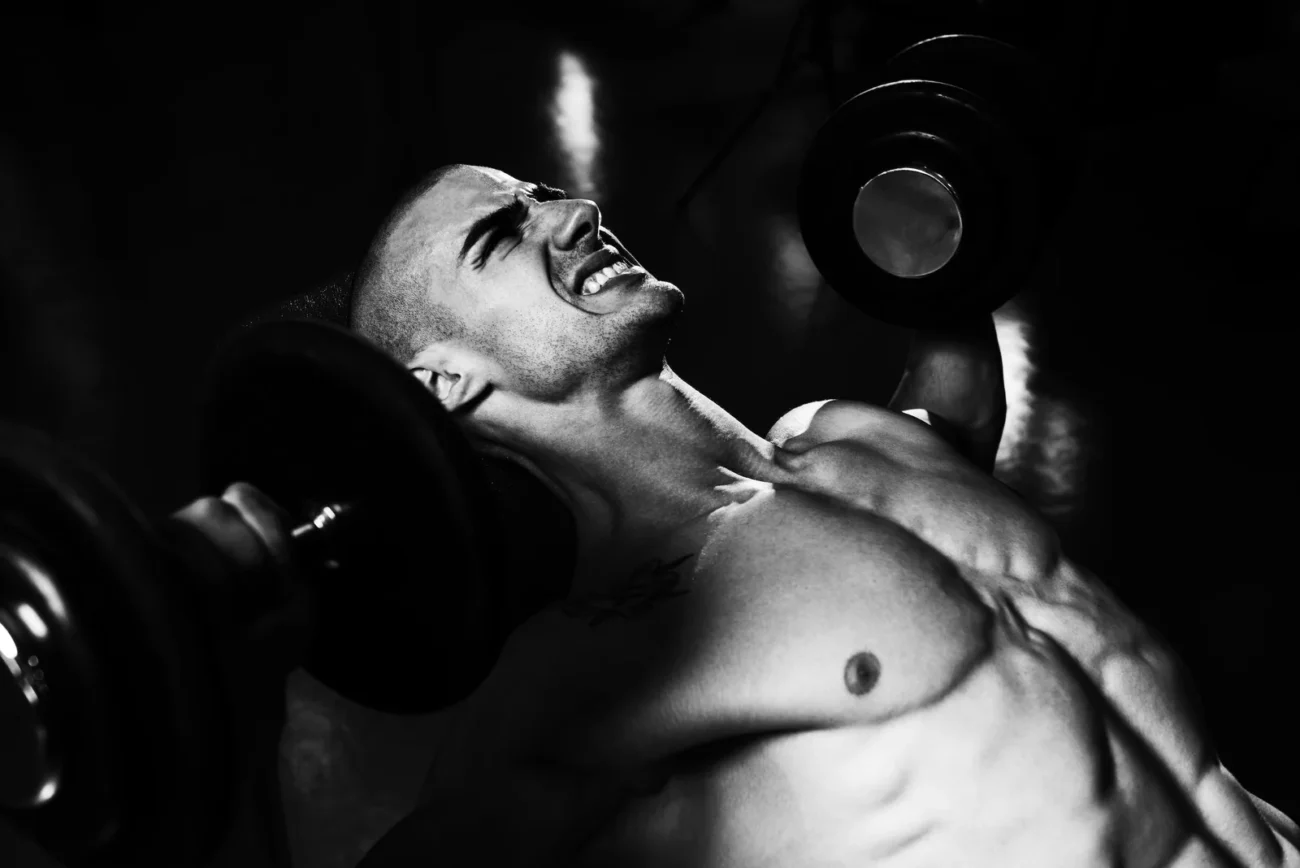
One of the most obvious indicators of strength and fitness is a well-developed chest. You can tell someone has properly exercised their chest almost immediately if they have a confident posture and a wider upper body. The chest muscles are crucial for daily activity in addition to helping one appear fit. Your upper body is continuously supported by your chest muscles, whether you’re pushing a door open, carrying large bags, lifting objects above, or even just keeping your shoulders stable when running or participating in sports.
Chest Exercise improves functional abilities, joint support, and body confidence in addition to making one appear muscular. However, a lot of novices have certain misconceptions about chest exercises. Some people think that just performing push-ups is sufficient. Others don’t learn good form and go directly to the bench press. Some people develop shoulder soreness because they lift too much weight too soon. Some people discover their upper chest appears flat and undeveloped after merely training their middle chest. Building a full, powerful, and balanced chest requires an understanding of the structure of the chest and how certain workouts target different regions.
The ideal way to exercise your chest muscles is to combine fly motions that stretch and shape the muscular fibers with pressing motions that gain mass. Growth requires regular effort, incremental overload, appropriate warm-up, good technique, and sufficient nourishment; it does not happen in a single week. Indeed, mentality is important as well. Your results will speak for themselves if you train your chest with patience, control, and focus.
The purpose of this tutorial is to show you precisely how to exercise your chest in a way that promotes actual growth. This blog will provide you with the information and doable steps to develop a fuller, stronger, and better-shaped chest, regardless of whether you are a novice just beginning your fitness journey, someone who has been working out for a while but is not seeing results, or a professional lifter looking to improve muscle shape.
This isn’t simply another set of workouts. This is a comprehensive guide that covers everything from comprehending the anatomy of your chest Exercise to perfecting form, choosing the appropriate exercises, avoiding typical blunders, implementing regular exercise regimens, eating healthily, and getting enough sleep. If you continuously use this method, you will develop a dense, contoured, defined, and muscular chest in addition to a larger one.
All those errors will be corrected by this guide. Here, we’ll go into great detail about chest Exercise:
• Understanding the chest muscles and how they grow.
• How to properly warm up your chest to prevent injury.
• The best exercises for novice, intermediate, and expert lifters.
• Correct form techniques.
• Common mistakes to avoid.
• Workout routines you can follow.
• Nutrition and recovery for chest muscle growth.
• How to stay consistent and improve gradually.
This is your comprehensive guide on chest exercises. Now let’s get started.
Knowing Your Chest Muscles
The Pectoralis Major is a large muscle that makes up the majority of your chest. This muscle consists of two primary parts: the larger lower half that covers the front of your rib cage and the higher section that provides the area around the collarbone an elevated appearance. The Pectoralis Minor, a lesser muscle located beneath it, aids in the movement and stability of your shoulder blade. The Serratus Anterior muscle, which runs along the ribs on the sides of your chest, facilitates more fluid movement of your upper body.

Why is this important? thus every component is trained in a unique way. You have to train every part of your chest if you want it to be full, round, and complete. You will mostly grow the middle portion of your chest if you solely perform flat bench presses. Your chest may appear large but not well-shaped, and your upper chest will appear flat. You must train the upper chest with incline movements in order to lift and form the chest. The lower chest needs to be trained in order to gain thickness and heaviness. Additionally, you need to do fly and cable exercises to enhance muscle definition and shape.
Chest exercises are similar to molding clay. Fly movements form the clay, while pressing movements construct it.
The Significance of Warming Up Before Chest Exercise
Exercises for the chest Exercise also work the shoulders, elbows, wrist joints, and triceps. The danger of damage increases if your body is not warmed up. Shoulder soreness or even a tear in the muscles of the chest can result from an abrupt hard bench press. Warming up increases range of motion, enhances blood circulation, warms your muscles, and alerts your body to the impending harder effort.
Arm rotations, moderate push-ups, and a few mild sets of your first exercise can all be part of a basic warm-up. Don’t miss this. A lot of folks who don’t warm up eventually develop shoulder ache.
Chest Exercises for Beginner
Learning proper mobility should be your initial goal if you are new to training. Don’t jump right into heavy lifting. Pay attention to deliberate, slow motion.
• Push-Ups: The ideal beginning workout is this one. It simultaneously works your triceps, shoulders, and chest. Avoid lowering your hips, lower softly, and maintain a straight back. Regain control by pushing back up.
• Dumbbell Bench Press: Since dumbbells allow for more natural movement than barbells, it is preferable for novices to start with dumbbells. It’s possible to learn how to push without straining your shoulders.
• Machine for Chest Pressing: helpful when you need more stability or when your arms are fatigued. Instead of balancing weight, this machine allows you to concentrate on using your chest muscles.
• Dumbbell Fly: This exercise helps to form the chest by stretching the muscles in the chest. Don’t drop the dumbbells too far; go slowly.
Chest Exercises for Intermediate
You can start utilizing bigger weights after your form gets better.
• Bench Press with Barbell: The ultimate chest workout. It increases strength and bulk. Avoid flailing your elbows excessively. Maintain a slightly arched back and an elevated chest.
• Dumbbell Press on an Incline: This is essential if you want to develop your upper chest. The growth of the upper chest is weak in many persons. Incline pressing is essential if you want your chest to appear lifted and substantial.
• Dips with weights: Dips strengthen your lower chest and thicken your muscles when performed with your body leaning forward.
• Cable Fly: Cable fly workouts let you feel the squeeze in your chest and improve the contour of your muscles. During both stretching and contracting, cables maintain the muscle’s tension.
Chest Exercises for Advanced
You can test your muscles with increasingly difficult variants if your foundation and control are solid.
• Bench Press with an incline barbell: The greatest upper chest builder is this one. Continue to move slowly and deliberately.
• Bench Press Decline: The lower chest is the aim of this. It makes the lower part of the chest rounder and thicker.
• Bench Press Pause: Time under stress is increased by pausing at the bottom. This makes the chest work harder and get stronger.
• Crossovers of cables: These are excellent for tightening the inner chest and enhancing definition at the conclusion of your workout.
Proper Form Is More Important Than Heavy Weight in Chest Exercise
Lifting too much weight in an attempt to impress others is a common mistake made by gym patrons. They flare their elbows, bounce the bar, or hardly engage their chest at all. Control is the key to healthy chest growth. Breathe deeply and take your time reducing the weight. Exhale and concentrate on squeezing the chest instead of just moving weight when pushing up.
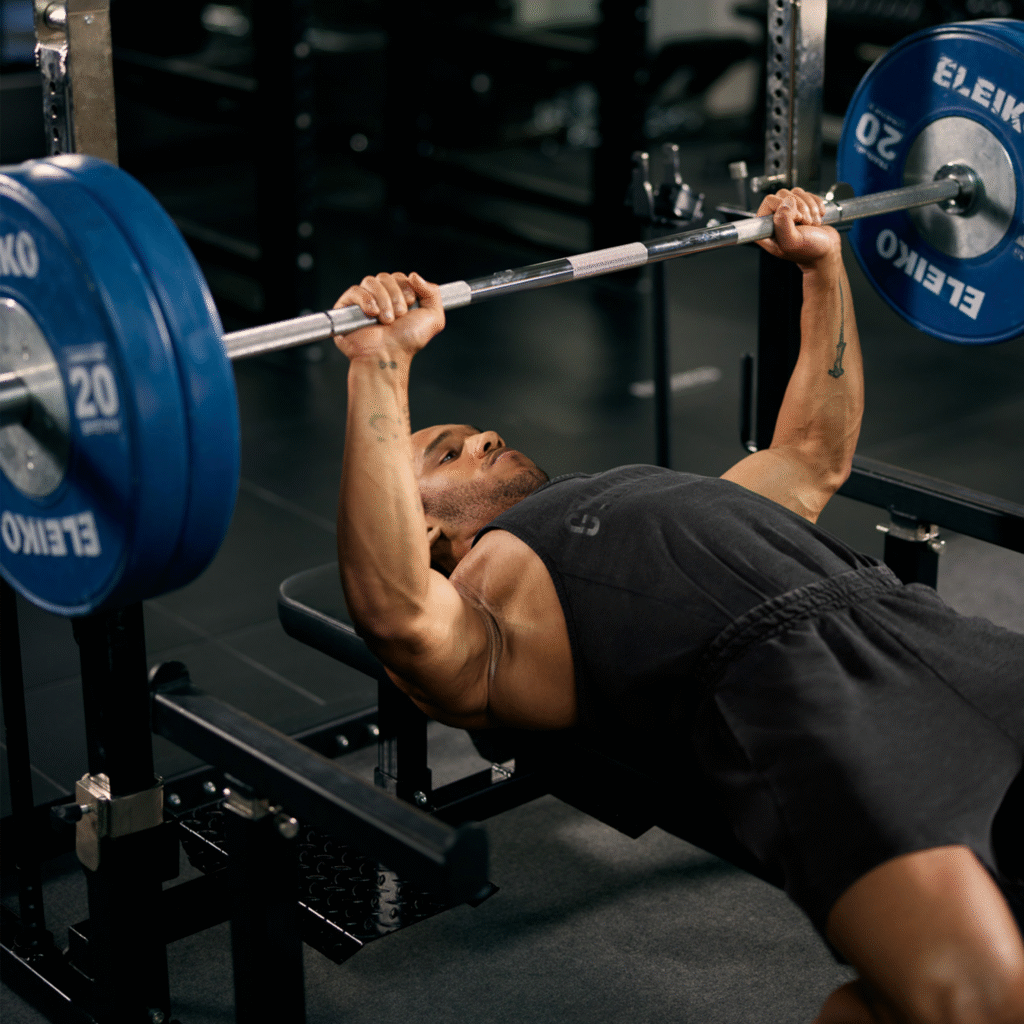
Your form needs to be adjusted if you feel the workout mostly in your shoulders or triceps. When you press, imagine raising your chest while keeping your shoulder blades gently pressed together. Strong chest engagement results from that.
Typical Errors That Prevent Chest Growth in Chest Exercise
• Training just the flat bench press is a major error. Your chest will appear incomplete if you don’t train the top, middle, and lower portions.
• Ignoring fly motions is another error. Fly motions stretch and sculpt the chest, while pressing motions increase thickness.
• Additionally, people rush their reps. Momentum is used in fast reps. Muscles are used in slow repetition.
• Excessive chest training is also detrimental. Before resuming training, the chest must heal for at least 48 to 72 hours. Frequent training causes muscular weariness instead of growth.
Chest Exercise Programs
You can select the routine that best suits your skill level.
• Routine for Beginner: Dumbbell fly, slow cable fly, machine chest press, dumbbell bench press, and push-ups.
• Routine for Muscle Building: weighted dips, mid-level cable fly, barbell bench press, incline dumbbell press, and concluding push-ups.
• Routine for Advanced: Low-to-high crossover, high-to-low cable crossover, decline bench press, heavy flat dumbbell press, incline barbell press, and ending dips.
Every regimen includes shaping exercises as well as upper, middle, and lower chest activities.
Chest Exercise Diet for the Development of Chest Muscle
You need adequate protein to build muscle. Muscle fibers are built and repaired by protein. Even if your training is flawless, you won’t grow if you consume too little protein. Eggs, chicken, paneer, fish, dal, tofu, milk, and whey protein are all good sources of protein.
Energy comes from carbohydrates. Your workouts will feel slow and feeble if you don’t eat enough carbohydrates. Add whole wheat foods, rice, potatoes, fruits, and oats.
Hormones like testosterone, which promote muscle building, are supported by healthy fats. Excellent sources include avocado, peanut butter, nuts, seeds, and olive oil.
Drink a lot of water. Dehydration impairs muscle function.
Recuperation and Rest Are Crucial in Chest Exercise
The significance of rest and recuperation is one of the most misinterpreted parts of developing a strong chest, or any muscle area. A common misconception is that more frequent and intense training will result in quicker muscle growth. They believe that if they perform endless sets or daily Chest Exercise, their chest will naturally enlarge. However, muscle growth does not occur while working out. Exercise is merely the catalyst. Your body rests, heals, and rebuilds the muscle fibers you stressed during training, which is when the real muscle-building process takes place.
Bench presses, push-ups, and fly movements are examples of Chest Exercise that cause microscopic tears in your muscle fibers. This is the very basis for muscular growth, thus it’s not a bad thing. When your body detects these tiny rips, it starts to mend them, strengthening and thickening the fibers. We refer to this process as hypertrophy. However, the muscle needs enough time to heal, enough nourishment to repair, and enough sleep to promote growth hormone production in order for hypertrophy to occur successfully.
You impede the growth process if you train your chest again before the muscle repair from the last session is finished. You start to break down more muscle instead of gaining it. Loss of muscle, persistent exhaustion, joint pain, and stagnation may result from this. Because of this, depending on your training regimen and recuperation capacity, chest exercises should often only be done once or twice a week.
One of the most crucial aspects of healing is getting enough sleep. Your body releases growth hormones, fixes muscular damage, replenishes energy, regulates hormones, and heals the nervous system as you sleep. Even with great workouts, your muscle growth slows down if you don’t get enough sleep. Aim for 7 to 9 hours of good sleep each night. Since most muscle healing occurs during deep sleep, it is particularly crucial.
Another important factor in rehabilitation is nutrition. Protein is necessary for the growth and repair of your muscles. Your body will find it difficult to rebuild muscle fibers if your diet is deficient in protein. Your energy reserves are replenished by carbohydrates, enabling you to resume intense training. Strength and muscle growth are influenced by hormone health, which is supported by healthy fats. Eating a balanced lunch that includes both carbohydrates and protein helps your body recover more quickly after a Chest Exercise.
Muscle healing might also be slowed by mental stress. Cortisol levels rise when the body is under stress. Elevated cortisol levels can hinder growth, lower vitality, and postpone muscle regeneration. For this reason, maintaining a balanced lifestyle is crucial. Recuperation involves both mental and physical aspects.
Lastly, mobility exercises and stretching can significantly improve recuperation. After your workout, light stretching can help you stay flexible, lessen stiffness, and increase blood flow to your muscles. This can lessen discomfort and enhance the quality of long-term movement.
To put it briefly, rest and recuperation are necessary rather than optional. While rest develops muscle, exercise promotes muscular growth. Your progress will be accelerated if you train wisely, get adequate sleep, eat healthily, and give your chest enough time to heal in Chest Exercise. However, your outcomes will always be restricted if you disregard rehabilitation. When you respect the process rather than rush it, you build strong muscles.
In conclusion
It takes good training, technique, intelligent exercise selection, enough diet, and consistent effort over time to grow a strong and well-developed chest, not haphazard exercises. Because they repeat the same exercises, rush their repetitions, lift weights incorrectly, or neglect important muscle areas like the upper chest in Chest Exercise, many people train their chests for months without noticing any improvement. When you train with purpose, you get real results.
Recall Chest Exercise that your chest is a muscle that reacts to steady advancement. Gain control, gradually increase the weight, and develop the ability to genuinely “feel” the chest working throughout each repetition. Prioritize quality over quantity. Five sets of careless, hurried motions are considerably less effective than one calm, deliberate set with proper form. The Chest Exercise reacts substantially to time spent under tension; the longer the muscle is stretched and used, the better the activation and growth of the muscle.
Your recuperation and rest are equally important as your Chest Exercise. Your muscles won’t grow if you put a lot of effort into your chest but don’t get enough sleep, eat enough protein, or give yourself enough time to recover. When your body heals itself at night, growth takes place. Thus, you should never undervalue the importance of nutrition and sleep. Your chest will expand both inside and outside of the gym.

Lastly, practice self-compassion. Every muscular chest you see in Chest Exercise, whether it’s on a bodybuilder, actor, athlete, or fitness model, was developed over time. If you are persistent, you will eventually make progress, even if it is sluggish at first. Keep track of your exercises, strive to lift a bit more weight or with better form every week, and have faith in your capacity to get better. One exercise at a time is how strength is developed.
In addition to molding your body, you are also molding your self-discipline, self-assurance, and identity.
Continue. Continue your education. Continue your training.
It takes consistency to develop your strongest chest rather than a single workout.
Follow us on
Instagram – Damn Fitt
Twitter – https://x.com/damnn_fit
Facebook – https://www.facebook.com/profile.php?id=61578307628888
Click Below👇🏻 Links For More Topics
Let’s Know About Celebrities Fitness
Click Here👇🏻
( https://fitdamn.com/category/celebrity/ )
Let’s Know About Cricketers Fitness
Click Here👇🏻
( https://fitdamn.com/category/cricketer/ )
Let’s Know About Fitness
Click Here👇🏻
( https://fitdamn.com/category/fitness/ )
Let’s Know About Fitness Challenges
Click Here👇🏻
( https://fitdamn.com/category/fitness-challenge/ )
Let’s Know About Fitness Facts
Click Here👇🏻
( https://fitdamn.com/category/fitness-facts/ )
Let’s Know About Fitness Mistakes
Click Here👇🏻
( https://fitdamn.com/category/fitness-mistakes/ )
Let’s Know About Fitness Foods
Click Here👇🏻
( https://fitdamn.com/category/foods/ )
Let’s Know About Footballers
Click Here👇🏻
( https://fitdamn.com/category/footballer/ )
Let’s Know About Motivational Quotes
Click Here 👇🏻
( https://fitdamn.com/category/quotes/ )
